What Are the Best Wooden Windows from China?
Choosing the best wooden windows from China requires more than comparing prices or browsing polished factory photographs. Buyers should examine timber species, moisture control, joinery, coating systems, glass performance, and production consistency. Pine may reduce cost, while meranti, oak, and larch can offer different levels of strength, texture, and weather resistance. The right choice depends on climate, building style, maintenance expectations, and installation quality.
John Leeke, a historic-building consultant and window-restoration specialist, offers a useful reminder: “Windows are the eyes of a building.” That observation matters when evaluating Chinese manufacturers. A well-made wooden window should feel solid when opened, close without forcing, and show clean mitred or mortise-and-tenon joints. Look closely at the corners. Check the drainage channels. Ask for moisture readings before finishing.
Reliable suppliers should explain kiln-drying procedures, timber sourcing, preservative treatment, and factory quality checks. Certifications can support trust, but documents alone are not enough. Request recent project references, test reports, detailed drawings, and sample sections. A small corner sample often reveals more than a catalogue.
No factory is perfect. Even excellent suppliers may show occasional coating variations or minor dimensional differences. That is where careful communication becomes important. Buyers should confirm tolerances, packaging methods, warranty terms, and replacement procedures before production begins. It is easy to focus on appearance and forget installation. That can be a costly mistake.
The strongest wooden windows combine craftsmanship, verified performance, suitable materials, and dependable after-sales support. This guide compares those practical details, helping readers identify Chinese manufacturers that deserve closer consideration.
What Makes Chinese Wooden Windows Stand Out?
Chinese wooden windows stand out through engineered timber, precise machining, and adaptable design. Laminated wood reduces warping better than many solid boards. CNC production also supports tight joints and repeatable dimensions. These details matter in humid cities and cold northern regions.
The International Energy Agency reports that buildings consume about 30% of global final energy. Windows influence heating, cooling, and indoor comfort. Chinese manufacturers increasingly combine timber frames with low-emissivity glazing, insulated cavities, and water-based coatings. These features can improve thermal performance, but product quality varies. A beautiful frame does not guarantee a durable window. The European Commission’s building research also stresses airtightness and installation quality, not glass alone. This point is often overlooked.
Tips: Ask for U-value, air-leakage, and water-resistance test results. Check whether the figures cover the complete window assembly. Request moisture content records for the timber. Around 8% to 12% is commonly targeted for interior woodwork, though local climate changes the ideal range. Inspect corner joints, drainage paths, and coating thickness. Independent testing is safer than catalogue promises. If possible, examine a sample after repeated opening and closing. It may reveal small weaknesses. That practical step is not glamorous, but it prevents expensive surprises.
Which Types of Wooden Windows Are Made in China?
Chinese manufacturers produce several practical wooden window types, each suited to different climates and budgets. Solid-wood windows use laminated pine, oak, larch, or other kiln-dried timber. Laminated wood reduces warping, although poor moisture control can still cause movement. Engineered-wood windows use bonded layers and offer more consistent dimensions. They are often selected for apartments, villas, and renovation projects.
Wood-aluminum composite windows combine an interior timber frame with an exterior aluminum shield. This design protects the wood from rain and ultraviolet exposure. Wood-PVC composite systems also appear in Chinese production, but their appearance and repair options differ. Common opening styles include casement, tilt-and-turn, sliding, folding, and fixed windows. Casement and tilt-and-turn designs usually support tighter seals than basic sliding windows. They feel different.
Performance data should guide selection. The International Energy Agency’s 2024 buildings report states that buildings consume about 30% of global final energy. Therefore, glazing and frame quality deserve serious attention. China’s GB/T 8478-2020 standard covers residential and building exterior windows, including air permeability, water tightness, and wind resistance. For high-efficiency projects, Passive House guidance commonly targets window Uw values near 0.8 W/m²K or lower. However, Uw alone can mislead. Installation gaps, drainage, hardware adjustment, and local humidity also affect results. I have seen attractive timber frames fail because installers ignored sill protection. Certification helps, but it cannot replace factory inspection, moisture testing, and site supervision. A cheaper window may become expensive after one wet season.
What Are the Best Wooden Windows from China?
Common wooden window types made in China include fixed, sliding, casement, awning, and tilt-and-turn designs. The chart compares the number of primary opening modes available in each design.
Fixed windows provide daylight without ventilation. Sliding windows open horizontally, while casement and awning windows use hinged movement. Tilt-and-turn windows combine two opening functions in one sash.
How Are Chinese Wooden Windows Manufactured?
High-quality wooden windows from China are made through controlled processing, not simple carpentry. Production usually begins with legally sourced timber, visual grading, and moisture testing. Kiln drying brings the wood near its target moisture range, often around 8–12% for interior-controlled applications. This reduces later warping, although it cannot eliminate movement completely. The USDA Forest Products Laboratory’s Wood Handbook identifies moisture variation as a major cause of wood dimensional change.
Manufacturing then combines finger-jointed or laminated components with CNC machining. Operators cut drainage channels, glazing rebates, and hardware openings to tight tolerances. Adhesive bonding follows controlled pressure and curing times. Workers sand each frame before applying primer, intermediate coatings, and weather-resistant finishing layers. Some factories use water-based coatings to reduce solvent emissions. The details matter. A beautiful surface cannot correct poor joint alignment.
The UNEP GlobalABC 2023 Buildings Global Status Report attributes 37% of global energy-related and process-related emissions to buildings and construction. That figure explains why Chinese manufacturers increasingly test glazing, air leakage, water tightness, and thermal performance. Independent laboratories may assess complete window assemblies under standards such as EN 14351-1 and ISO 10077. However, factory certificates are not enough. Buyers should compare test conditions, timber moisture records, coating specifications, and installation tolerances. In practice, manufacturing quality can still vary between production batches. That is an uncomfortable, but necessary, point.
What Features Define the Best Wooden Windows from China?
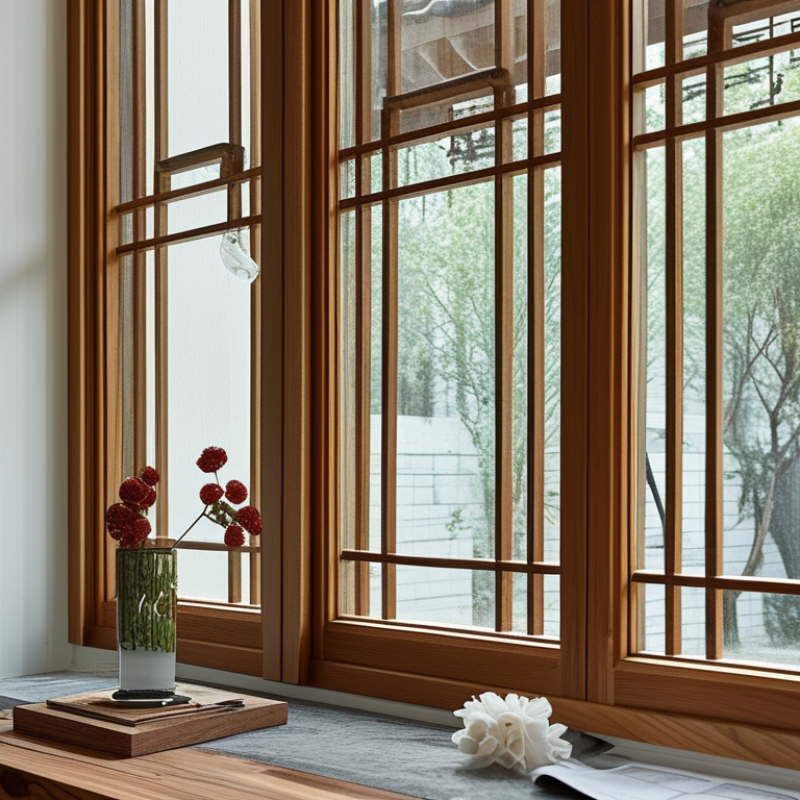
The best wooden windows from China are defined by performance, not attractive grain alone. Material selection matters. Stable hardwood or engineered timber should resist swelling, twisting, and seasonal movement. Ask for the wood species, moisture range, finger-joint details, and treatment records. During a practical inspection, I look closely at corner joints and drainage paths. Clean joints should meet tightly, without visible gaps or excessive sealant. A moisture meter can reveal risks that polished samples hide.
Small details matter. Low-emissivity glass, warm-edge spacers, and accurate gaskets improve comfort and reduce condensation. However, glass performance must match the local climate and wall design. Hardware should operate smoothly, hold the sash firmly, and resist corrosion. Tested air, water, and wind performance offers stronger evidence than sales language. Request independent test reports, installation guidance, maintenance instructions, and a clear warranty.
Reliable suppliers also explain repainting intervals and replacement parts. That openness builds trust. Still, no window is perfect. Even well-made timber can fail when installers ignore expansion gaps or expose frames to standing water. I would question any quotation that hides the timber grade, coating system, or test conditions. Factory quality control matters, but installation quality can change the final result. A careful site survey should confirm opening dimensions, drainage, insulation, and fixing methods before production begins.